What Is the Difference Between Edu Mail and Temp Mail?
In today’s digital world, email services are no longer one-size-fits-all. Two popular options stand out: Edu Mail and Temp Mail. While both provide email functionality, they serve completely different purposes.
If you’re searching for edu mail vs temp mail, difference between edu email and temporary email, or which email is better for privacy and access, this guide breaks everything down clearly and practically.
What Is Edu Mail?
Edu Mail (Educational Email) is an official email address issued by schools, colleges, or universities to students, teachers, and staff. These addresses usually include .edu or an institutional domain and act as digital proof of academic affiliation.
An Edu Mail account unlocks many exclusive benefits:
Student verification on online platforms
Access to educational tools and software
Academic communication with institutions
Eligibility for student-only discounts
Edu Mail is widely accepted by major software providers such as Microsoft, Adobe, and Google Workspace, offering free or discounted services to verified students.
Key Benefits of Edu Mail
Long-term usability
Professional academic identity
Access to premium educational resources
Software discounts and free licenses
Higher trust and credibility online
What Is Temp Mail?
Temp Mail (Temporary Email) is a disposable email service that lets users generate instant inboxes without registration. These addresses usually expire within minutes or hours.
Temp Mail is designed for:
Protecting your main inbox from spam
Staying anonymous online
One-time website registrations
Testing platforms or services
Core Features of Temp Mail
No sign-up required
Instant email creation
Short-lived inboxes
Strong privacy protection
Perfect for quick verifications
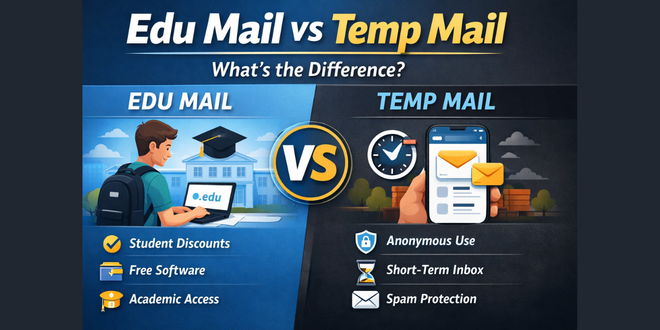
Edu Mail vs Temp Mail: Core Differences
Purpose
Edu Mail
Built for long-term academic and professional use. Grants access to student platforms, discounts, and institutional services.
Temp Mail
Made for short-term, disposable use. Ideal for privacy and quick sign-ups.
User Type
Edu Mail: Students, teachers, academic staff
Temp Mail: Anyone needing a temporary email
Email Lifetime
Edu Mail: Active as long as you’re affiliated with the institution
Temp Mail: Expires in minutes or hours
Security
Edu Mail offers institutional-level security and often supports two-factor authentication.
Temp Mail focuses on anonymity, not account protection. It’s not suitable for sensitive data.
Access & Benefits
| Feature | Edu Mail | Temp Mail |
|---|---|---|
| Educational discounts | ✅ | ❌ |
| Software access | ✅ | ❌ |
| Anonymous usage | ❌ | ✅ |
| Spam protection | Partial | Full |
| Official communication | ✅ | ❌ |
When Should You Use Edu Mail?
Use Edu Mail if:
You are a student or educator
You need long-term access to learning platforms
You want academic software discounts
You require a verified professional email
You’re registering for educational services
When Should You Use Temp Mail?
Use Temp Mail if:
You want to avoid sharing your real email
You need a disposable inbox for verification
You’re signing up temporarily
You want to prevent spam
You’re testing websites or apps
Final Verdict (Hard SEO Conclusion)
Edu Mail and Temp Mail serve entirely different goals.
Edu Mail is ideal for long-term academic access, professional credibility, and exclusive student benefits.
Temp Mail excels in privacy, anonymity, and short-term convenience.
Simply put:
👉 For education and permanent accounts: choose Edu Mail.
👉 For privacy and quick sign-ups: choose Temp Mail.
Understanding this difference helps you stay secure, organized, and efficient in your online activities.